When I first stumbled on coyyn, I had more questions than answers. Was it just another framework, or something meaningful? That curiosity became a journey of exploration. Over time, I discovered that this adaptive system isn’t just jargon—it’s a flexible model that helps simplify complexity while empowering creativity. In a world where uncertainty is the norm, learning to harness this approach feels less like an option and more like a necessity.
Defining coyyn
At its core, coyyn is a modular, human-centered framework. Think of it as a set of adaptable building blocks designed for projects, ideas, or organizations. Instead of linear, rigid paths, this method introduces independent modules that can pivot without derailing everything. That evolution—from linearity to modularity—is what makes the model so distinct and valuable.
Core Principles of coyyn
The strength of coyyn comes from its core principles. First is modular adaptability, meaning that projects can be split into self-sustaining units. Next is checkpoint-driven planning, where progress is measured by tangible, achievable milestones. Finally, human-centric design ensures people—not processes—remain the heart of the framework.
Why People Use coyyn
Adopting coyyn typically starts with frustration—overwhelm from too many moving parts or rigid systems that can’t adapt. This framework answers these pain points by letting users pivot seamlessly. For entrepreneurs, it means adjusting to market feedback. For creatives, it means exploring different versions of a concept without discarding progress.
My First-Hand Experience
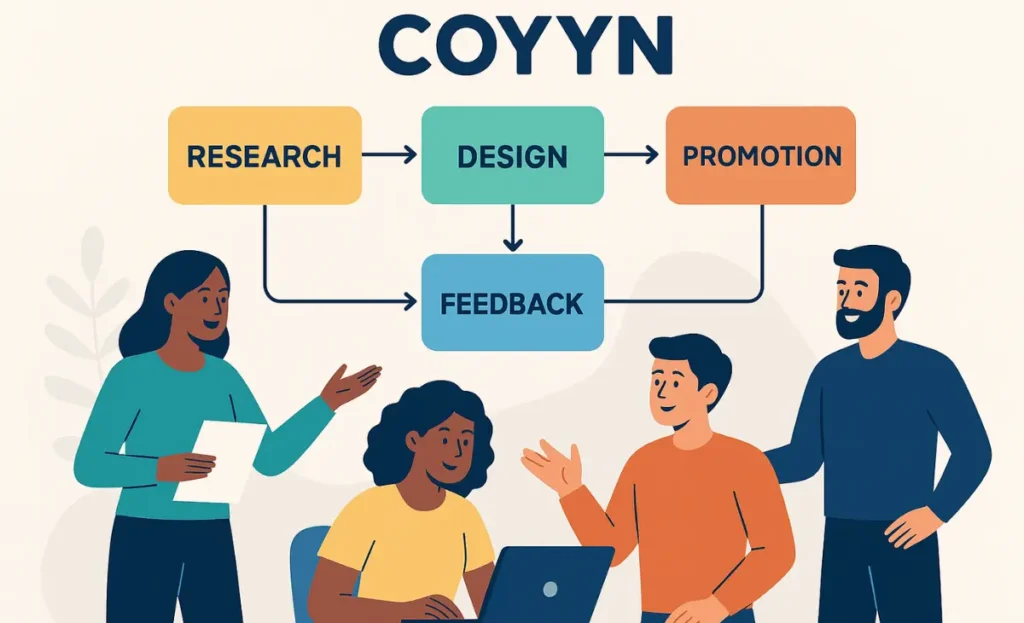
In my work, I applied this framework to launch a content-driven campaign. Instead of mapping everything linearly, I broke it into modules: research, production, promotion, and feedback. When production slowed, promotion continued. When feedback arrived early, I slotted it back into research. That adaptive flexibility made the project stronger and far less stressful.
Benefits of coyyn
The benefits of using this framework emerge quickly. One major advantage is the clarity it brings in chaotic situations, ensuring even messy projects stay navigable. Another strength lies in the collaboration it encourages, allowing teams to plug into modules without disrupting others. Resilience is an added gain, since when one part stalls, others keep flowing. Personally, I’ve seen how this model keeps momentum alive when traditional methods stall.
Coyyn vs Traditional Methods
Traditional workflows are like trains—once derailed, everything stops. In contrast, coyyn resembles a fleet of cars, each moving independently toward a shared destination. The independence of modules gives this approach the upper hand in uncertain or fast-changing contexts, though it requires more discipline in coordination.
Common Challenges
Not everything about this system is effortless. I’ve seen people over-split tasks, losing sight of the big picture. Resistance is another hurdle; teams accustomed to rigid frameworks may fear added complexity. Success depends on introducing the model gradually, ensuring each person sees its tangible value.
Real-World Case Study
Last year, I organized a community event entirely using this modular method. We divided work into sections: content, logistics, sponsorship, and outreach. When logistics stalled due to venue issues, outreach continued unhindered. Sponsors joined because we stayed on schedule, even with setbacks. Without this structure, we might have canceled. With it, the event thrived.
Step-by-Step Application
To use coyyn, begin by defining your outcome. Then, divide your work into modules that balance independence and interconnection. Assign clear checkpoints to measure progress. Rotate modules among team members to spread learning and prevent silos. Always maintain flexibility, allowing modules to pause or pivot without disrupting the entire system.
Tools That Complement the Framework
I’ve found tools like Trello, Notion, and Slack integrate naturally with this model. They allow clear checkpoints, module assignments, and smooth communication. What matters most isn’t the tool but how it reflects the modular spirit.
Coyyn for Small Teams
For smaller teams, coyyn brings remarkable clarity. A two-person startup can split strategy and execution into separate modules, avoiding overload. Even solo freelancers can apply the model by dividing creative, administrative, and client work into manageable units.
Coyyn for Large Organizations
In large companies, coyyn scales by mapping departments as modules. Marketing, product, sales, and support can each pivot independently while staying aligned. I’ve seen this reduce bottlenecks and speed up innovation pipelines.
Coyyn in Creative Industries
Writers, designers, and filmmakers embrace coyyn for its flexibility. For example, a film crew might divide modules into scripting, shooting, editing, and promotion. Each adapts to circumstances while feeding into the bigger vision.
Coyyn in Tech Industries
Developers and product managers use coyyn to iterate quickly. Instead of linear waterfall methods, modules handle ideation, testing, and feedback loops separately. This makes software development faster and more adaptive.
Coyyn in Education
Educators use coyyn to break learning into modular experiences. In classrooms, lessons, projects, and assessments become modules that adapt to student pace. Research projects thrive under this system because setbacks in one area don’t halt the entire effort.
Coyyn in Startups
Startups often deal with shifting priorities. it provides the agility to pivot without collapsing. By separating product development, fundraising, and marketing into modules, startups stay nimble. I’ve seen founders sleep easier knowing setbacks in one area don’t endanger the whole venture.
Coyyn and Leadership
Leaders adopting coyyn shift from command-and-control to facilitation. Instead of micromanaging, they guide modules with trust and checkpoints. In my leadership experiences, this methodology fostered autonomy while keeping accountability intact.
Future Trends of coyyn
By 2025, interest in coyyn is rising, especially among hybrid teams. The future of this approach lies in integration with AI-driven analytics, giving leaders real-time visibility across modules while preserving independence.
Challenges in Adoption
Adopting this system requires training. Teams often misinterpret it as chaos instead of structured flexibility. Misconceptions can hinder adoption, so leaders must frame it as clarity, not confusion.
Practical Tips for Beginners
For newcomers, start small. Choose three modules only. Use simple checkpoints. Test this framework on short projects before scaling up. By starting gradually, you’ll build trust and proof of concept.
Advanced Practices
Once comfortable, scale coyyn with hybrid frameworks. Combine it with agile sprints or lean methodologies. This enriches efficiency while maintaining flexibility. I’ve seen advanced teams thrive when it serves as the glue across multiple methods.
FAQs
What is coyyn best for?
Coyyn is best for projects that require adaptability and modular clarity.
How do I begin using coyyn?
Start by splitting your work into three meaningful modules with checkpoints.
Is it useful outside of business?
Yes, from education to art projects, it adapts anywhere modular clarity helps.
What makes coyyn unique?
Its ability to let modules pivot independently without collapsing the whole project.
Does it require special tools?
Not necessarily—tools help, but mindset matters more.
Conclusion
Coyyn isn’t just a framework—it’s a mindset. It empowers resilience, fosters collaboration, and enables creativity to thrive even in uncertainty. Whether you’re a student, entrepreneur, or executive, starting small with this method could redefine how you manage projects.
If you’re ready, apply coyyn today by dividing your next project into three modules. See firsthand how clarity and adaptability change the outcome. And if you want expert guidance or tailored templates, I’m here to help you integrate coyyn effectively.