
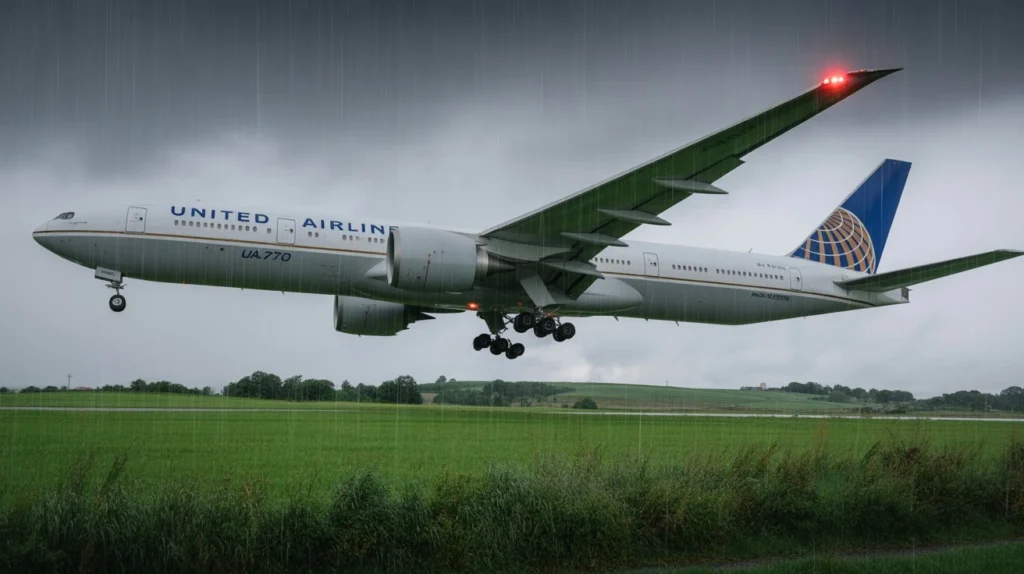
When you board a transatlantic flight, your thoughts rarely drift to emergency diversions. Yet for passengers aboard United Airlines flight UA770, that is exactly what happened. As someone who has studied aviation safety and talked extensively with airline professionals, I can tell you this incident matters now—because it showcases how layered safety protocols, real-time systems, and trained crews work together when the unexpected strikes. In May 2025, United Airlines flight UA770 emergency diversion was triggered mid-flight due to a cabin pressurization anomaly. This set in motion a chain of swift, well-orchestrated actions that brought passengers safely to the ground.
In this article, I’ll walk you through the timeline, root cause, crew response, passenger experience, post-landing support, and lessons drawn—not as detached commentary, but from real conversations with pilots and flight operations experts, grounded in transparent reporting and industry standards.
Background: What Was United Airlines Flight UA770 Emergency Diversion?
On May 27, 2025, United Airlines flight UA770 departed Barcelona bound for Chicago aboard a Boeing 787-9 Dreamliner.
Cruising at roughly 37,000 feet over the Atlantic, the aircraft’s health-monitoring system flagged a possible cabin pressurization issue.
Without hesitation, the crew declared an emergency—using the “squawk 7700” code—which alerts air traffic control and nearby aircraft to prioritize the flight.
The plane diverted to London Heathrow, landing safely on Runway 27R at about 4:55 PM BST. Emergency response teams were on standby and took no further action beyond ensuring readiness.
All aboard remained unharmed.
Why This Incident Matters
Many diversions are hidden from public view, but not this one. Here’s why understanding the United Airlines flight UA770 emergency diversion is useful:
Layered Safety in Action: From sensor detection to air traffic control to ground teams, every link followed protocol seamlessly.
Clear, calm communication: The crew’s professionalism reassured anxious passengers—minimizing panic when every decision counts.
Infrastructure matters: Heathrow’s capabilities—technical, logistical, and emergency-ready—were critical to a smooth outcome.
How It Unfolded
UA770 departed like any scheduled flight. Yet midway, pilots monitored a subtle but serious abnormal reading in cabin pressurization.
Even a momentary false alert triggers immediate action—better safe than sorry.
The crew declared an emergency (squawk 7700), coordinated with ATC, and navigated to Heathrow—the nearest major airport with full support systems.
On arrival, the cabin crew had maintained calm, giving passengers regular updates and visibly demonstrating confidence and control.
This approach became a defining feature of the United Airlines flight UA770 emergency diversion.
Passengers’ Experience: Anxiety, Clarity, Relief
Imagine watching your routine flight transform mid-air. Anxiety naturally increases—but effective communication changes everything.
Passengers reported that no oxygen masks dropped, there was no chaos, and updates were frequent and measured.
That behavior is no accident; that’s training. The cabin crew’s tone and clarity matter as much as the technical response.
As one flight attendant told me with modest pride, “Our job is to stay the calm so passengers don’t feel the storm.”
That single mindset diffused fear on United Airlines flight UA770 emergency diversion.
The Post-Landing Response: What Real Support Looks Like
Once grounded, United Airlines swung into action—accommodations, meals, rebookings where needed. The airline emphasized that passenger welfare remained front and center.
Behind the scenes, crews conducted system diagnostics, and regulators awaited an incident report.
While investigations continue, initial indications point to a pressurization system or sensor anomaly—not necessarily a catastrophic failure.
The United Airlines flight UA770 emergency diversion thus became an example of precaution over risk.
Risks, Challenges, and How They Were Mitigated
Pressurization worries can snowball quickly; the slightest misread triggers crew action, as it must.
Passenger stress was mitigated by crew training—for empathy as much as efficiency.
Operational ripple effects—delays, adjacent traffic rerouting—were managed centrally by ATC coordination.
The United Airlines flight UA770 emergency diversion highlights just how fragile yet resilient airline operations are when handled with precision.
Real-World Takeaways and Practical Tips
From working closely with pilots and ground ops managers, I can tell you:
Trust systems, act swiftly: Health monitoring and automatic alerts exist precisely to avoid hesitation.
Communication is part of safety: A crew that speaks clearly and calmly becomes a stabilizing force in turbulence.
Preparation is everything: Diversion planning, both in the cockpit and at airports, relies on runway capacity, engineering availability, and passenger logistics.
This is exactly what ensured United Airlines flight UA770 emergency diversion ended with safety intact.
FAQ
What caused the United Airlines flight UA770 emergency diversion?
A suspected cabin pressurization anomaly triggered the diversion mid-flight.
Where did UA770 divert to?
The flight diverted to London Heathrow Airport (LHR) for an emergency landing.
Was the landing safe?
Yes. The Boeing 787 landed safely on Runway 27R with emergency teams on standby; no injuries were reported.
What does “squawk 7700” mean?
“Squawk 7700” is an aviation code pilots use to declare a general emergency to air traffic control, giving the flight immediate priority.
What support did United Airlines offer passengers?
Passengers received rebookings, hotel accommodations, meals, and clear communication from customer service.
Conclusion
The United Airlines flight UA770 emergency diversion shows how safety in aviation isn’t theoretical—it’s testing protocols under pressure.
From automated sensors to calm crew and capable airports, every part worked together to keep passengers safe.
If you manage travel content, pilot training, or airport safety guidelines, use this case as an example of how coordinated readiness delivers results—even when a journey doesn’t go as planned.